Drivetrain
Our robot is versatile, protected, and agile. Versatile: GoBILDA U-Channel allows for a multitude of mounting options, and we modified our pieces of channel to contain only the parts we needed, saving weight. Protected: 3D-printed bumpers, Control Hub mounts, and a ramp prevent any sample from getting stuck under or inside our robot. By covering up the space needed for other subsystems, we can afford the ability to drive and operate carefree. Agile: Using the GoBILDA mecanum wheels, we were able to create an agile and efficient way of moving around the field.
Intake
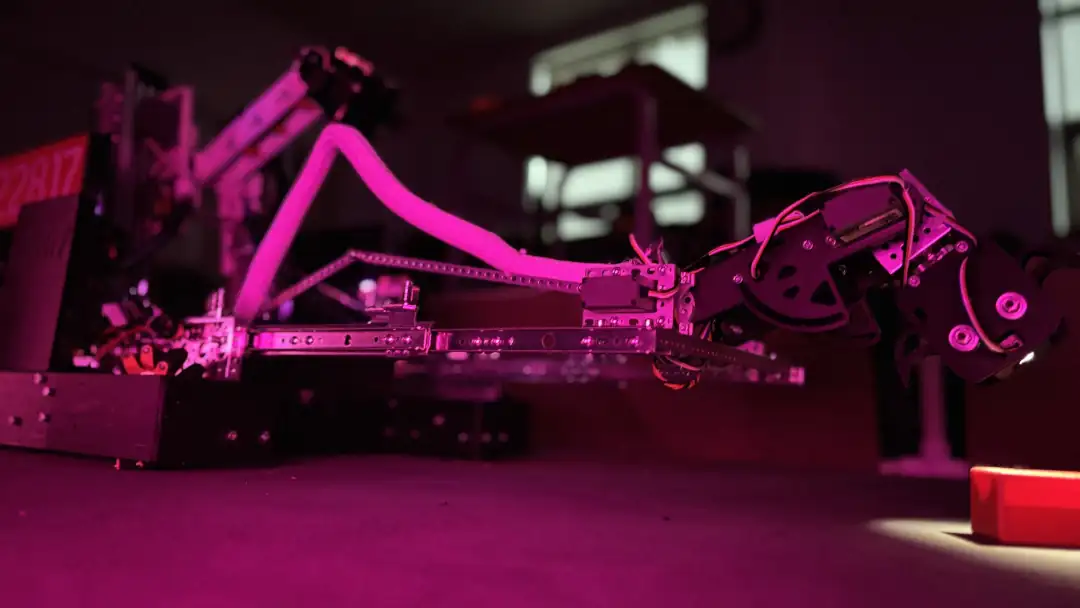
Our specialized point-tipped claw efficiently picks out samples in dense clusters, allowing us to take our alliance-specific sample from the submersible and increase our teleop score. An integrated camera provides detection and location of the sample in the submersible, allowing intaking to be automated and reducing human error. Using our odometry and some trigonometry, the field-centric claw stays at the same angle and position no matter where the robot is on the field or what direction it is facing, enabling the driver to input controls from their perspective instead of the robot’s and making intaking much less complicated. Finally, instead of belted or strung extensions, we used a linkage for quick and reliable intaking, run by a single 117 RPM GoBilda motor, providing high speed, torque, and precision.
Deposit
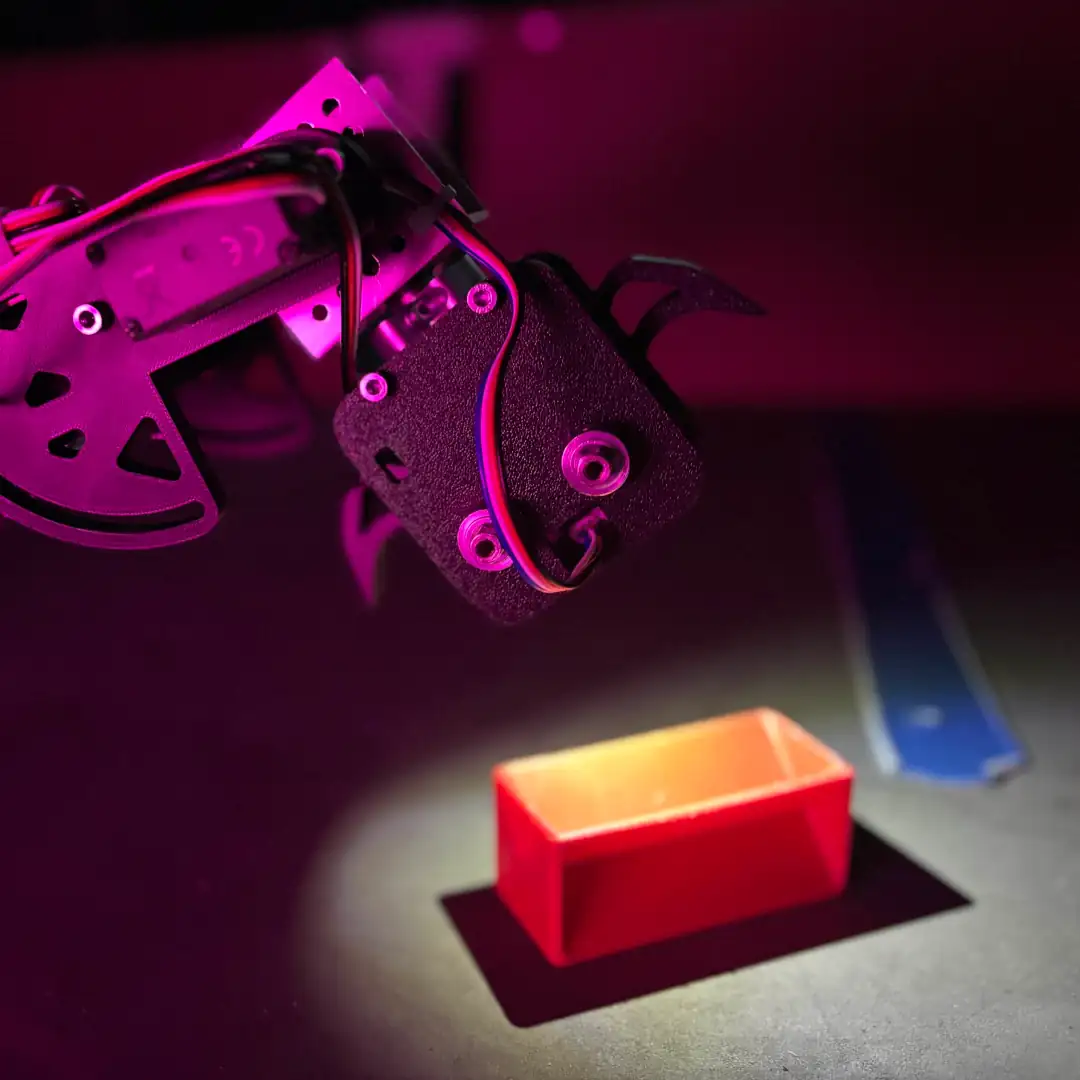
Our robot’s extension, arm, and claw were designed for speed, strength, and reliability. Using two belt-driven GoBILDA Viper Slides powered by 435 RPM motors, we created a quick and strong extension system for depositing samples and specimens. For our deposit arm, we implemented a Coaxial Virtual 4 Bar (CV4B) mechanism, as it is reliable, agile, and keeps the majority of the load off the end of the arm. This arm is powered by three main servos, two for driving and turning the bars, and one for coaxial tilt. The two drive servos rotate the main arm around the coaxial shaft, allowing it to move independently from the shaft itself, while the coaxial servo controls the shaft, which is belted to the end effector to manage tilt. Our claw was 3D printed from ABS filament to be rigid and strong, and is thicker than our intake claw to effectively grab and score specimens without accidentally releasing them.
Ascent
To keep our design simple and space-efficient, we integrated our hooks directly into the CV4B mounts. This approach not only saves space but also distributes the load evenly across a larger area, improving durability during climbs. However, the angles of our deposit slides caused the back of the robot to scrape against the bottom rung of the submersible during ascent, preventing a successful pull-up. To address this, we added horizontal rollers to the back of the robot, allowing them to roll smoothly against the rung and enable a clean, consistent climb.
Sponsors